Rhinos are woven into the identity of the Waterberg—an iconic species that reflects our region’s resilience and conservation achievements. In the face of formidable challenges, communities, conservationists, and partners have rallied together to protect them. As WLA’s flagship species, rhinos embody the purpose on which the organisation was built and continue to symbolise its long-term vision and determination of securing a lasting legacy of protection and conservation for the Waterberg.
The story of rhinos here is not only about survival. It is about hope for the future, the strength of collective action, and the determination to safeguard Africa’s wild landscapes. It is also a reminder to celebrate progress, acknowledge the obstacles that remain, and recommit to the urgent work needed to ensure rhinos continue to roam freely for generations to come.
WHITE AND BLACK RHINO IN THE WATERBERG
Both black and white rhino occur within the Waterberg, with approximately 10% of the region supporting rhino populations. Rhinos are of critical importance to the Waterberg, both as a cornerstone of the tourism economy—one of the region’s most significant economic sectors—and as landscape engineers. As large megaherbivores, they play a vital ecological role by shaping vegetation structure and creating habitat conditions that benefit a wide range of other species across the landscape.
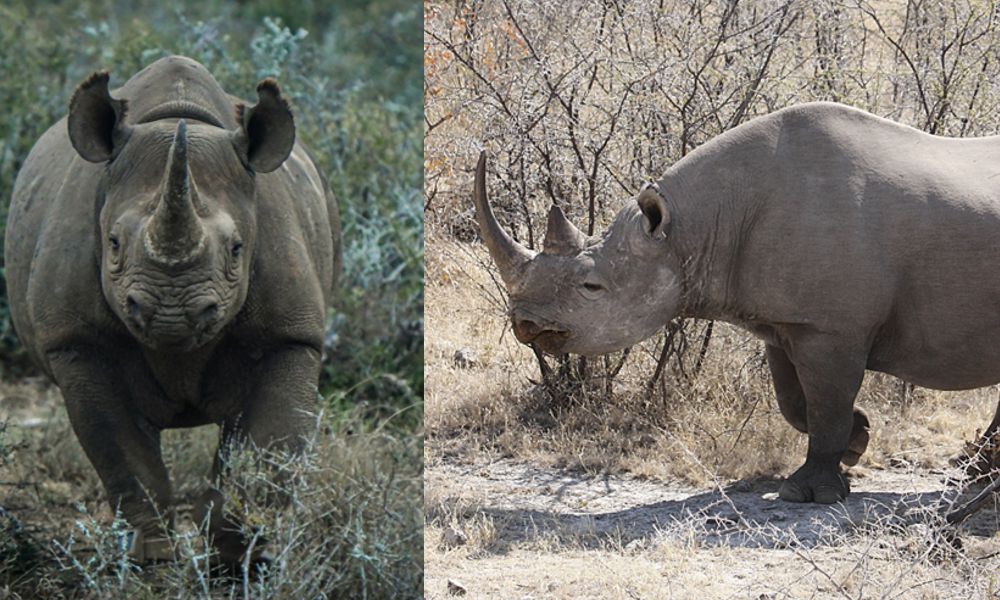
Black rhino or Hooked-lipped rhino – Diceros bicornis
Occurs in 12 African countries, however only 5 support populations of >200 individuals
Current population – Africa (2024): 6,788 individuals
Current population – South Africa (2024): 2,307 individuals
Three surviving subspecies
1960: numbered >100,000
Lowest population number: 2,300 (mid-1990s)
Current global population: Increasing
IUCN Global Red List: Critically Endangered
South Africa’s Red List: Endangered
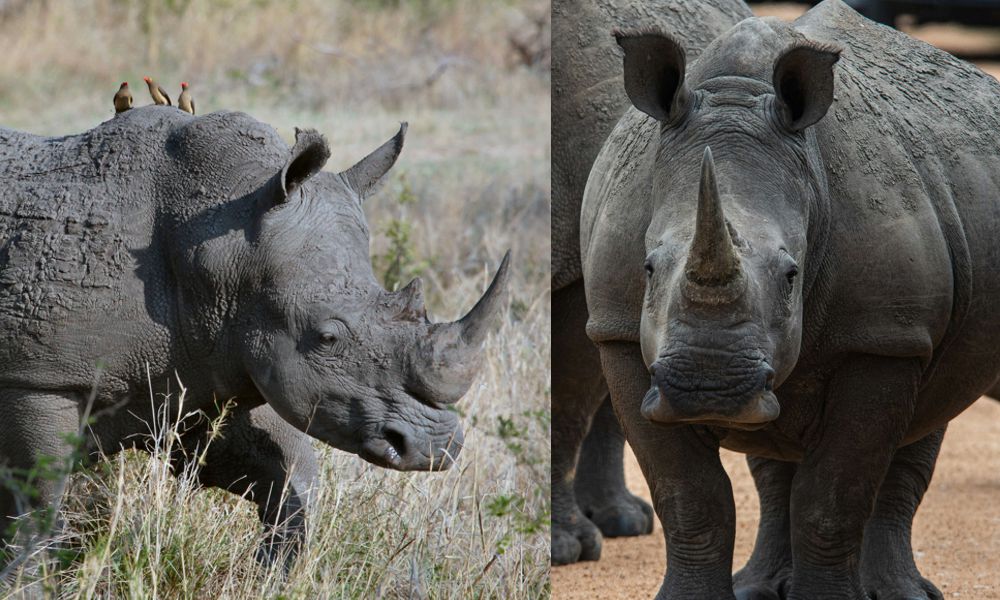
White rhino or Wide-mouthed rhino – Ceratotherium simum
Occurs in 13 African countries, however only 4 support populations of >200 individuals
Current population – Africa (2024): 15,752 individuals
Current population – South Africa: 12,082 individuals
Two subspecies (Northern subspecies only 2 females in Kenya)
1960: Northen subspecies numbered 2,230
1960: Southern subspecies numbered 650
Lowest population number for Southern subspecies: <100 (early 1900s in KwaZulu Natal)
Current global population: Decreasing
IUCN Global Red List: Near-threatened
South Africa’s Red List: Near-threatened
RHINO POACHING CRISIS
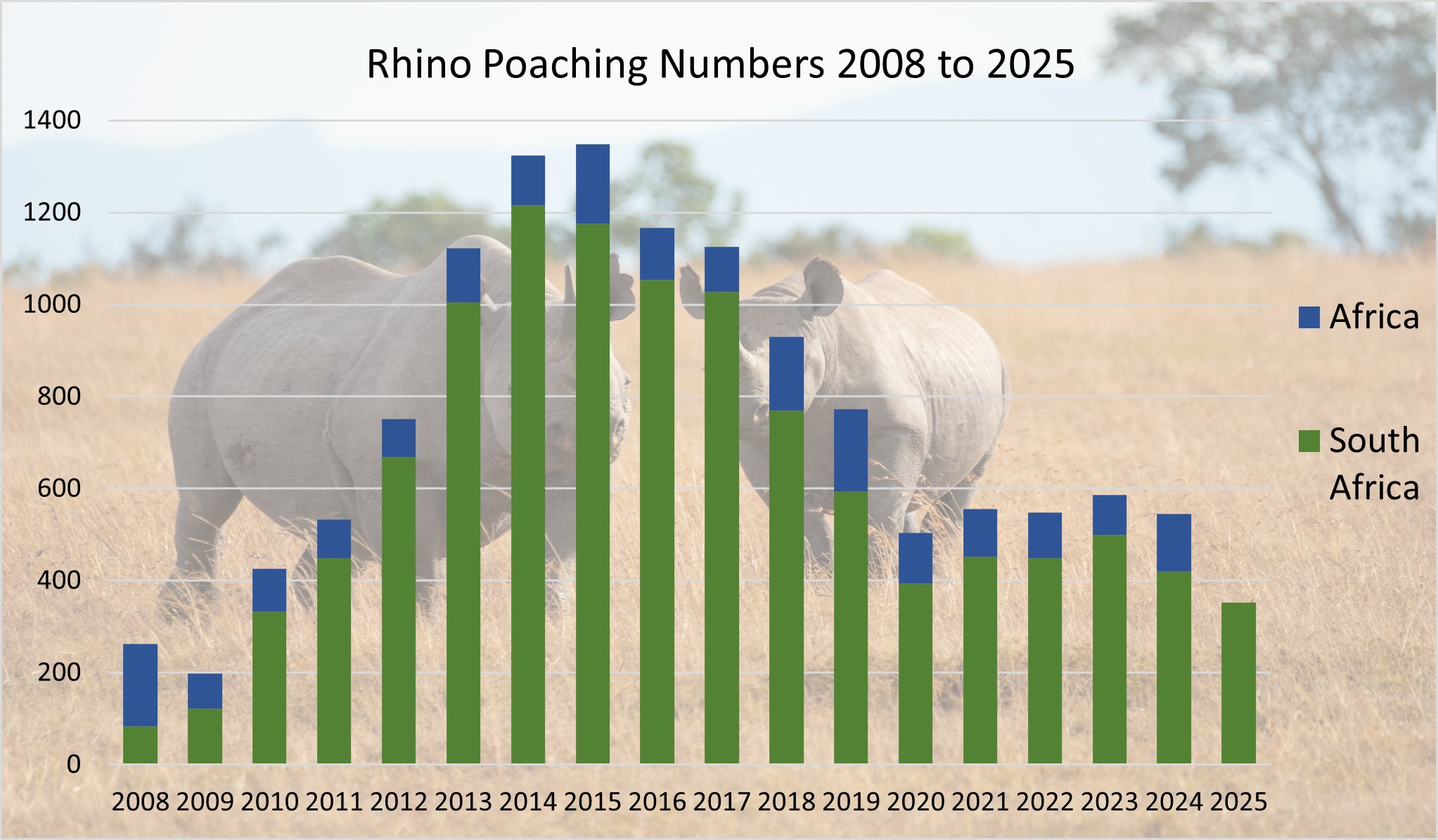
Over the past fifteen years, rhino poaching has escalated into one of the most pressing conservation crises of our time. In 2007, South Africa recorded just 13 rhinos poached. By 2014, that number had surged to 1,215 in a single year. Although numbers have since declined, an estimated 550 rhinos are still killed annually across Africa, representing approximately 2.5% of the continent’s population each year — equivalent to one rhino lost every fifteen hours.
The drivers of this illegal trade are complex. Rhino horn continues to be sought after for use in decorative trinkets, power status symbols and “after party” tonics, as well as traditional medicine, despite having no scientifically proven health benefits. This demand is fueled by cultural beliefs, economic pressures, and the operations of sophisticated, organized crime networks to profiteer on a ‘low risk’ commodity that can help fund other international crimes such as drugs, human trafficking, arms and ammunition.
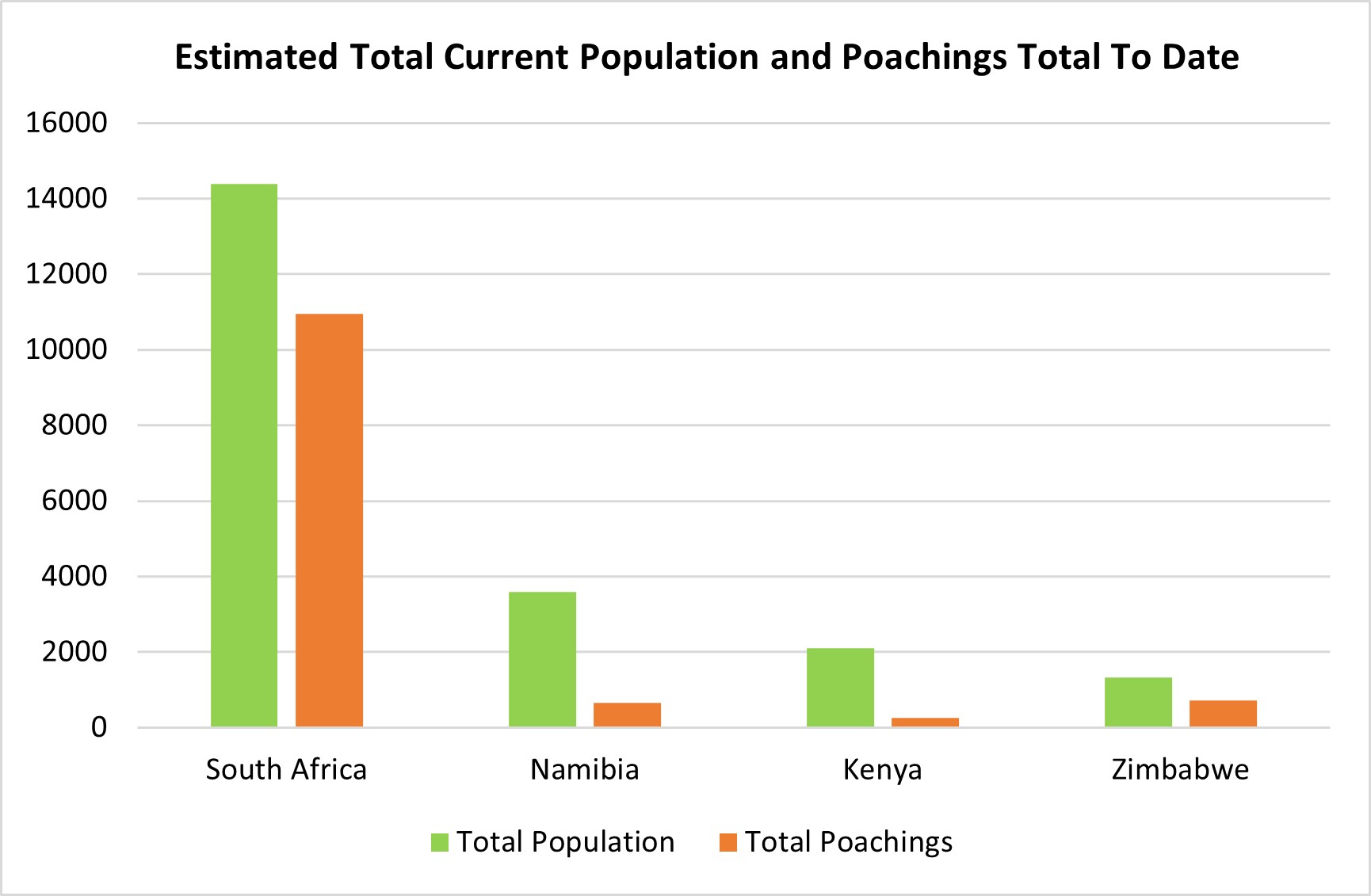
South Africa holds significantly more rhino than any other African country and therefore plays a pivotal role in the survival of Africa’s rhinos. South Africa along with the three other top rhino-hosting countries, holds 96% of the continent’s rhino population, yet these countries have also borne the brunt of the crisis, experiencing 97% of all poaching losses.
South Africa alone is home to 69% of Africa’s rhinos and has suffered 85% of the continent’s poaching-related deaths over the past decade, underscoring both its importance as a stronghold for the species and the immense conservation challenges it faces.
Every rhino saved, every global trafficking ring dismantled, and every extra space available for rhinos brings us closer to a future where they can thrive in the wild