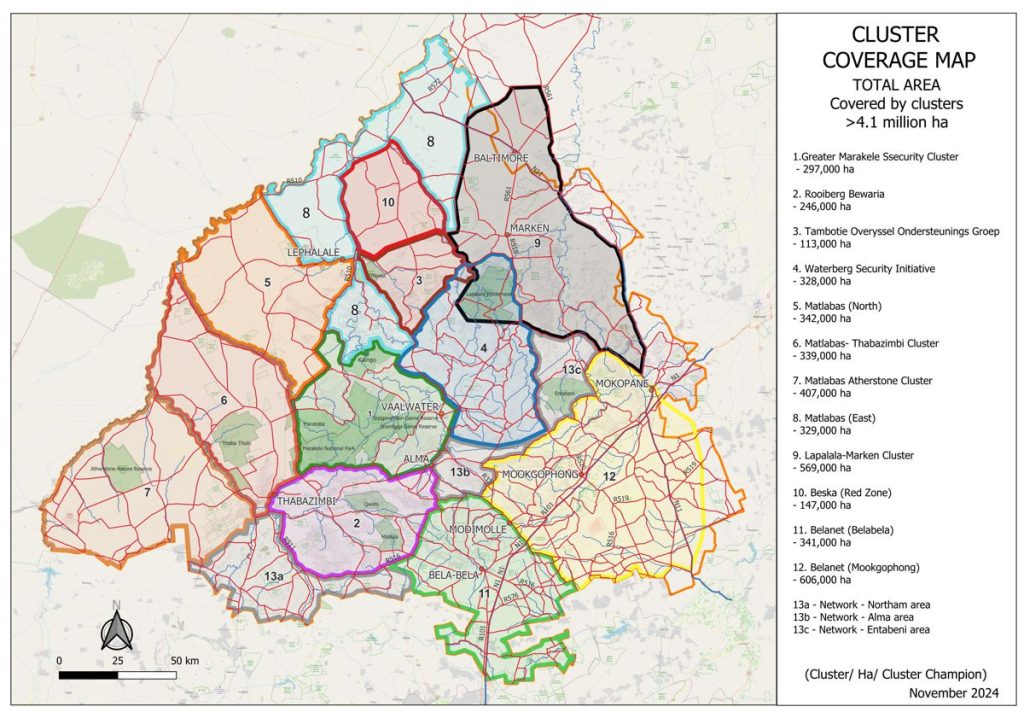
The Waterberg spans an expansive 4.5 million hectares. To ensure meaningful impact across such a large area, smaller geographic units—known as clusters—have naturally developed over time. These clusters enable focused action and measurable outcomes within specific regions, while collectively forming the Greater Waterberg Network.
This network emerged organically over several years. When the umbrella organisation, the Waterberg Landscape Alliance (WLA), was established, some clusters were already operating. Others were later formed to meet pressing needs such as fire-fighting capacity, emergency response, and crime prevention. In many rural parts of the Waterberg, where access to formal emergency services is limited, communities took the initiative to organise themselves, creating support systems tailored to their landscapes. These locally driven efforts have significantly strengthened safety and security across the wider region.
Building on the success of the early clusters, additional groups were formed as needs evolved. As their number and influence grew, WLA recognised the opportunity to bring them together into a coordinated and cohesive Greater Waterberg Network.
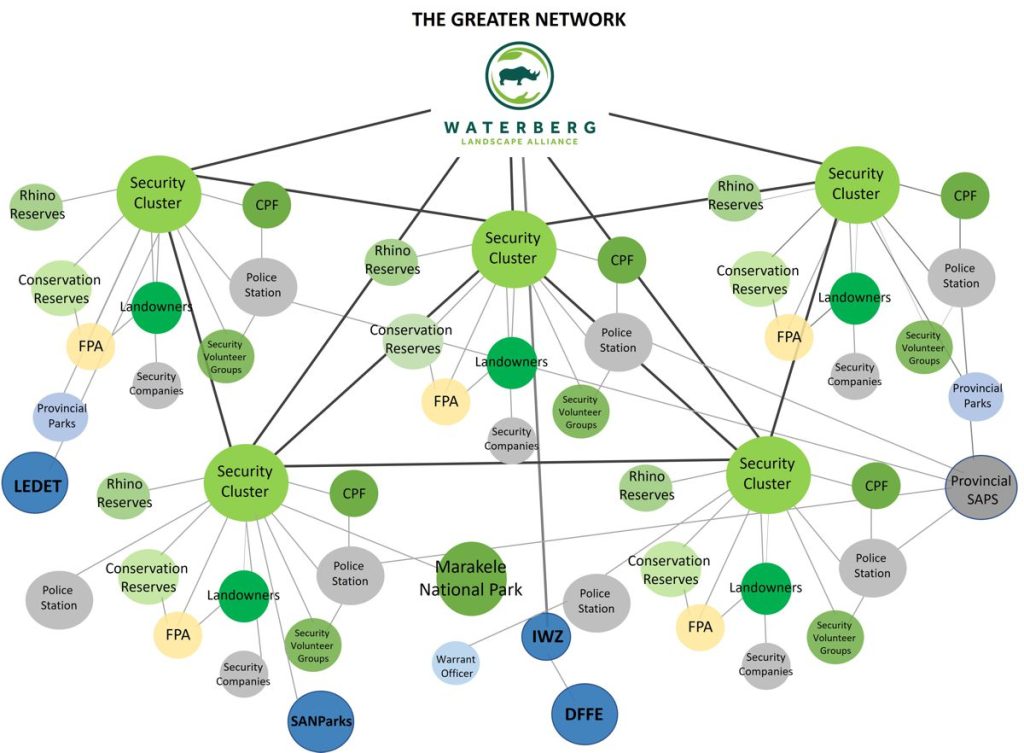
Today, this network is hosted and supported by WLA, which acts as a facilitator for coordination and collaboration. Each cluster is led by a dedicated champion who participates in a network committee. This committee drives collective action, supports collaboration, and guides strategic decision-making, including the allocation of WLA financial support across the network.
The security clusters themselves represent geographical areas where community-based groups—such as farm watches, volunteer security groups, or other neighbourhood initiatives—have formed. These groups consist of neighbouring landowners who have come together, formally or informally, to pursue shared goals centred on safety and security. Structures vary: some are formal non-profits, others voluntary associations. Most have constitutions and membership systems through which fees support the operational needs of the cluster.
Security clusters play a vital role in connecting and supporting stakeholders within their areas. They provide a platform for rapid information sharing and coordinated emergency response, which is especially valuable for landowners. Each cluster offers essential support to landowners, local businesses, SAPS, conservation reserves, NGOs, and even government departments such as LEDET. By linking local stakeholders, they create a stronger, more resilient landscape-wide network.
“It takes a network to defeat a network.” Wildlife Justice Commission